Most cover letters get skimmed in under 10 seconds, if they're opened at all. Here's the structure that earns those 10 seconds — and turns them into a proper read.
Does anyone actually read them?
Many South African employers still explicitly ask for a covering letter, and recruiters use it as a fast filter for two things a CV can't show: how well you communicate in writing, and whether you've actually read their advert. A generic, unedited letter signals a mass application and is often the fastest way to be deprioritised — while a sharp, specific one can move you ahead of a more experienced but less engaged candidate.
The four-paragraph structure that works
- Opening: Name the exact role and company — never "this position" — and one line on why it caught your attention. Skip "I am writing to apply for..."
- Paragraph two: Pick your two strongest, most relevant achievements and connect them directly to two requirements from the advert — don't repeat your whole CV.
- Paragraph three: A short, genuine line on why this company specifically — their market, their reputation, a project you know they've worked on. Generic praise ("a leader in its field") reads as filler.
- Closing: A confident, simple call to action — you're available for an interview and look forward to discussing how you can contribute.
Keep it short and specific
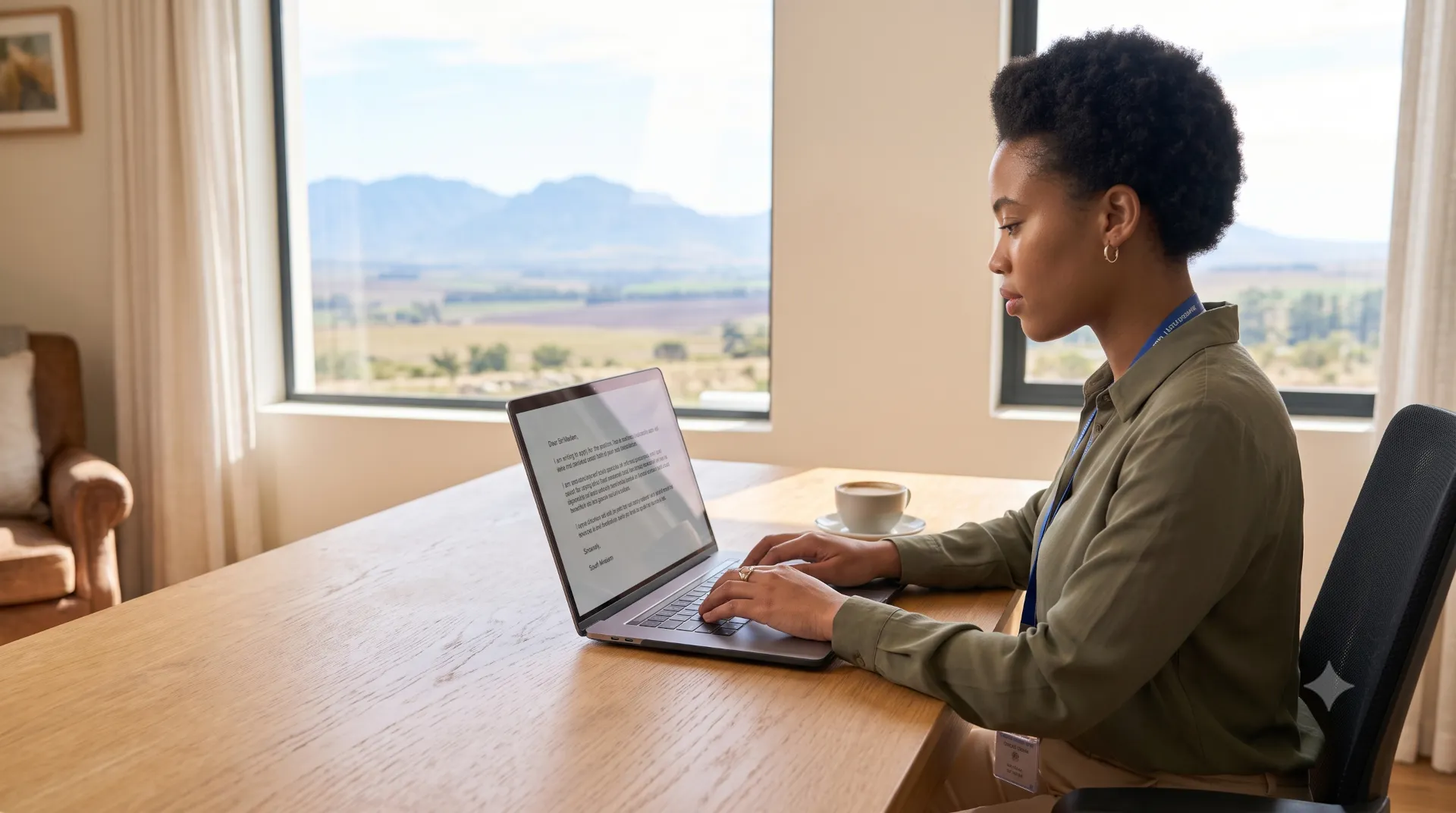
One page, under 350 words. Address it to a named person where you can find one (check the advert, company website or LinkedIn) rather than "To Whom It May Concern" — it costs two minutes and noticeably changes the tone of the letter. Write a new letter, or meaningfully edit a template, for every application; recruiters who review high volumes of applications can spot a copy-pasted letter immediately, often from a mismatched company name left in from the last application.
Key takeaways
- Open with the specific role and company — skip generic openers entirely.
- Link two real achievements directly to two requirements in the advert.
- Keep it under one page and address it to a named person wherever possible.